Walk into almost any independent bar in America and the backbone of the cocktail menu looks familiar: a Margarita, an Old Fashioned, a Martini. That stability is real — but it hides a more interesting story. Look closer at Q2’s cocktail menu trends and a faster-moving layer of challenger brands, modern variations, and emerging flavors is quietly reshaping what gets poured.
At Ground Signal, we analyze cocktail menus across 81,000+ independent, on-premise National accounts. Our Q2 review points to a two-speed dynamic: the top of the menu is eroding slowly, while the energy — and the growth — is concentrated a few rungs down. Here’s what that looks like across brands, cocktails, and flavors.
Brands: the leaders hold, but they’re not the growth story
The category leaders remain entrenched. Tito’s still commands vodka menus at 28% share; Bacardí leads rum at 22%; Cointreau tops liqueurs. But holding rank isn’t the same as growing. Several icons are treading water or slipping — Jameson, Cointreau, and Absolut all lost menu share year-over-year.
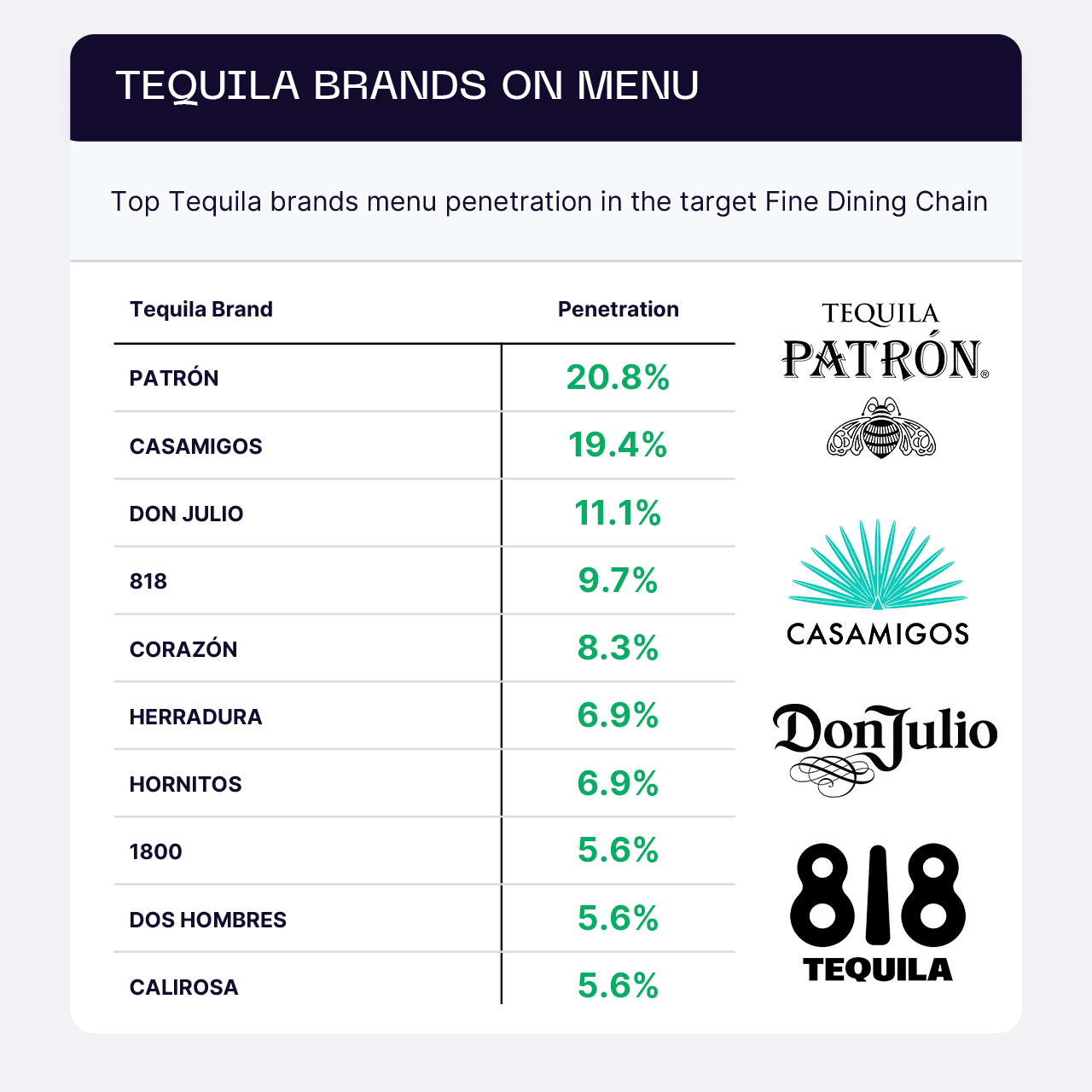
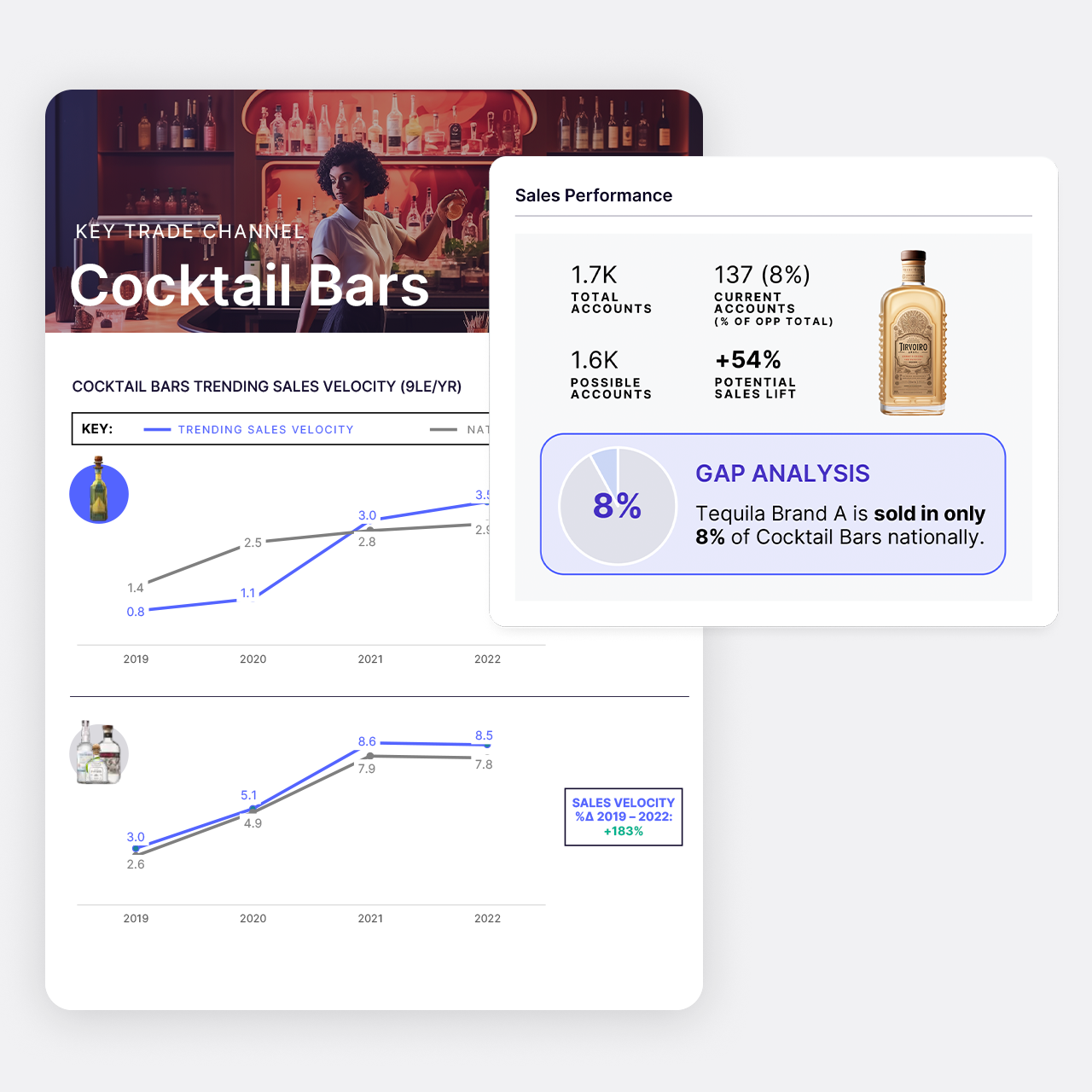
The momentum lives in the challenger tier. Lalo and Codigo 1530 in tequila, Belvedere and Haku in vodka, Mount Gay in rum, and Aviation in gin are posting the sharpest year-over-year gains — real movement, though mostly off small (~1–3% menu share) bases. The most valuable position of all belongs to the handful of brands doing both: established names that are still climbing, like Empress 1908 in gin and Planteray in rum.
Cocktail menu trends: the classics aren’t fading — they’re fragmenting
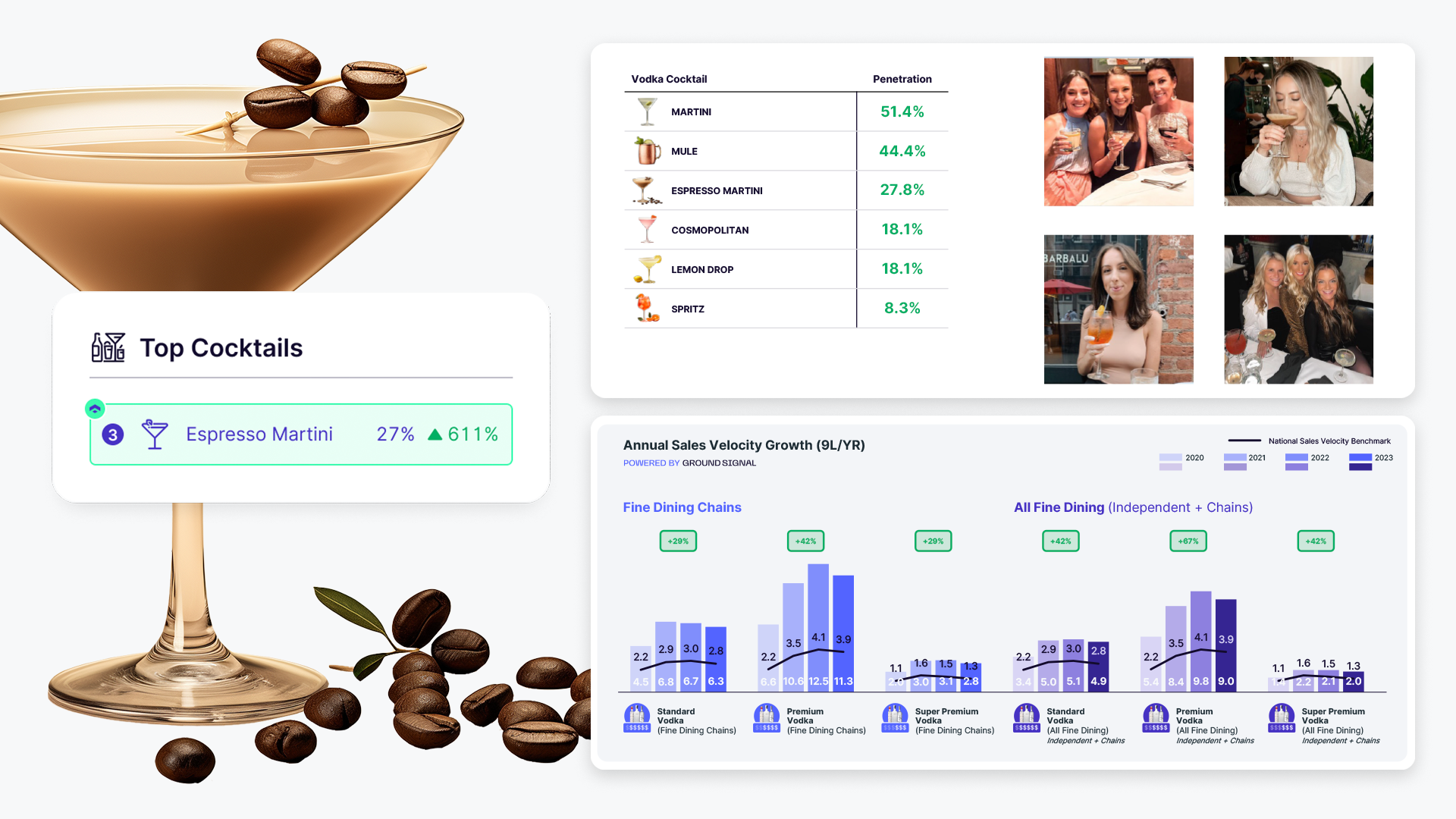
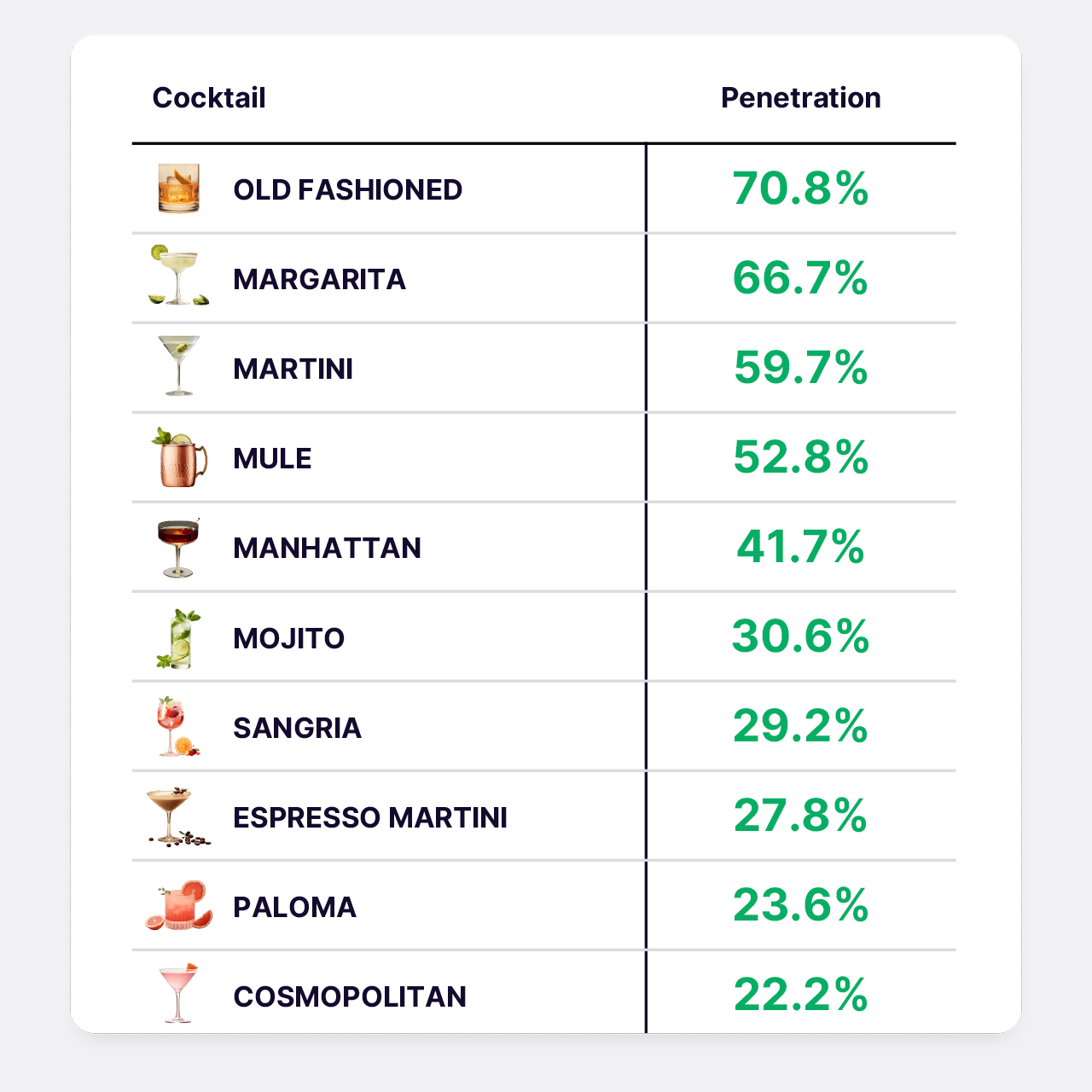
The most-listed serves are still the usual suspects: Margarita (50%), Old Fashioned (32%), Martini (29%). And most of them are softening year-over-year, the Martini and Sangria among the steepest.
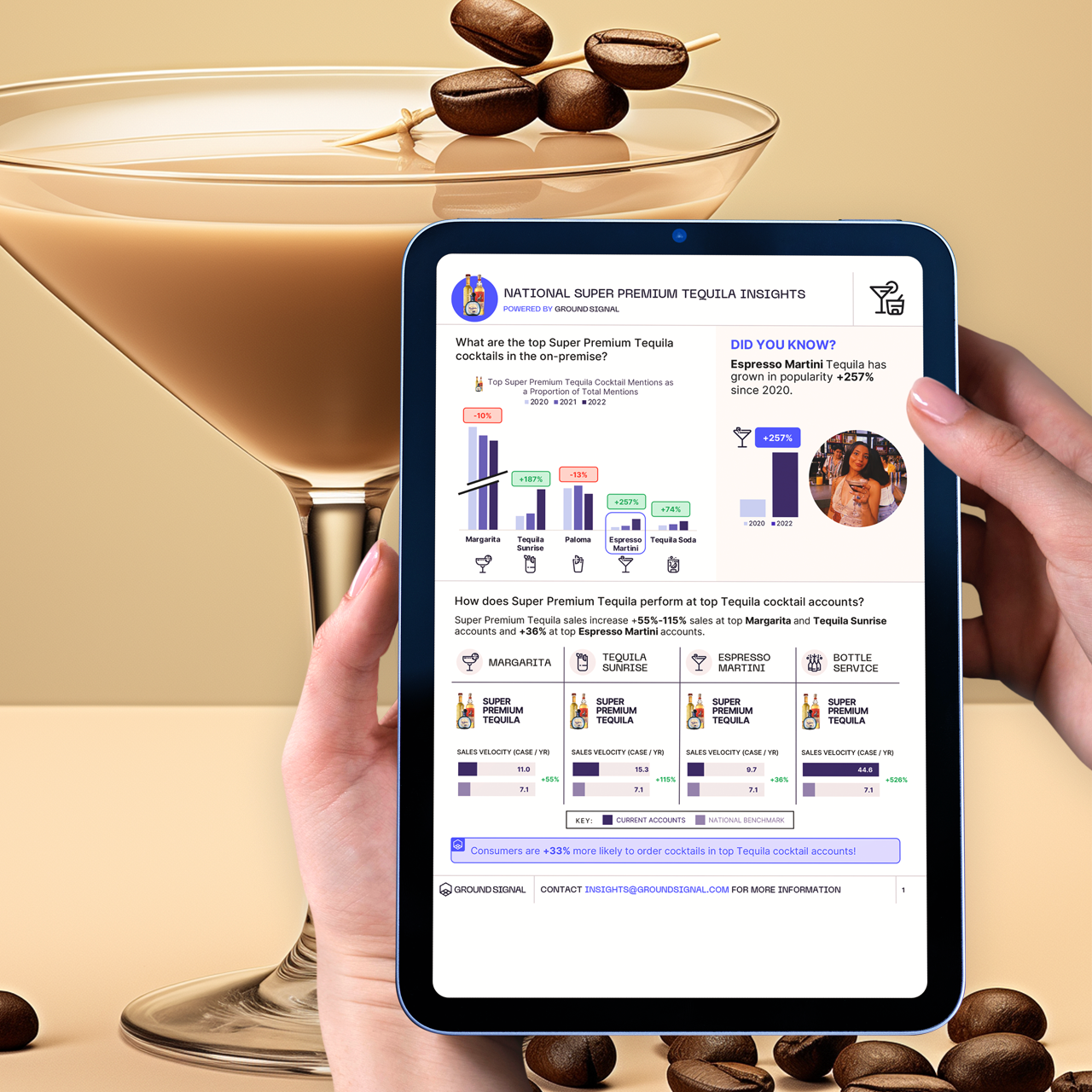
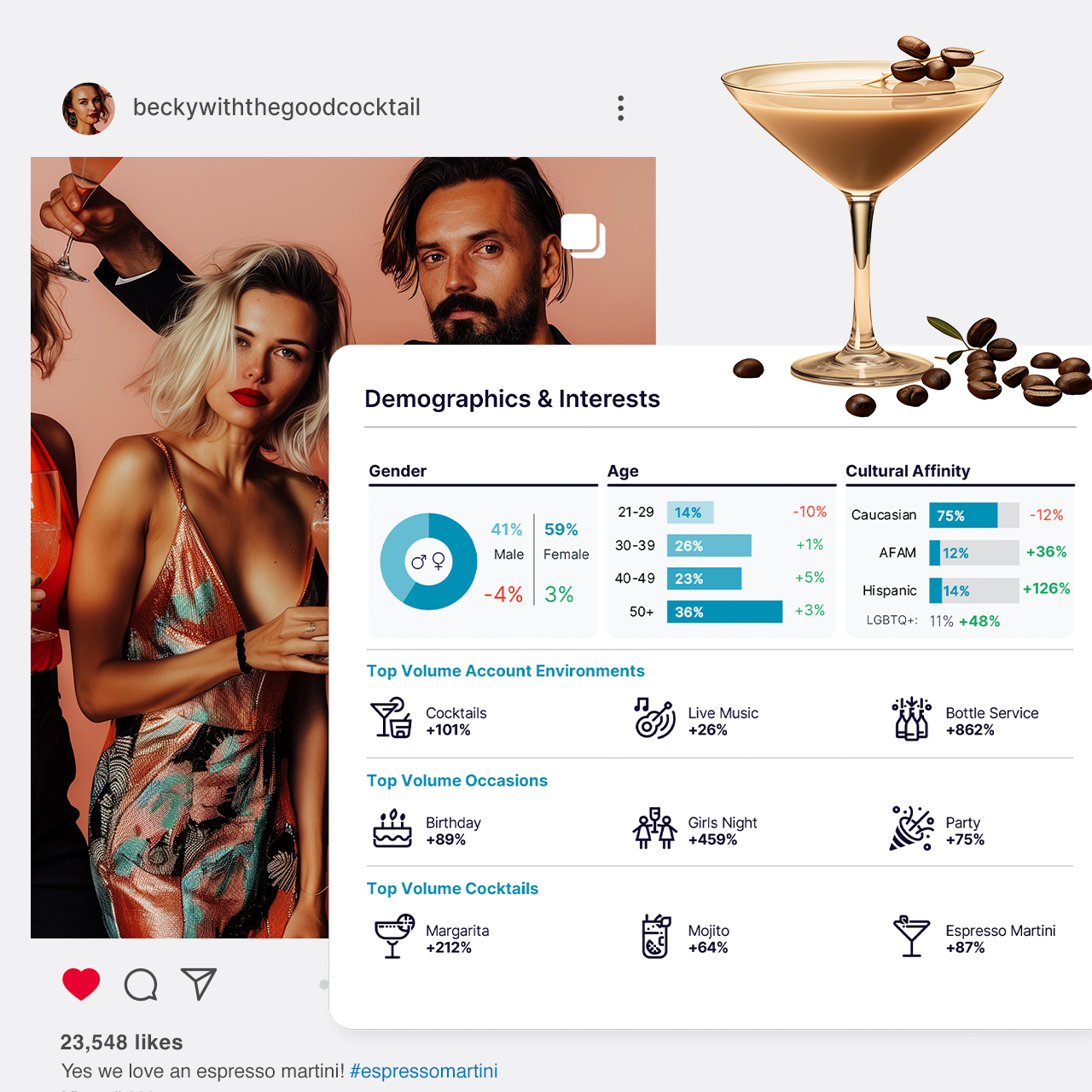
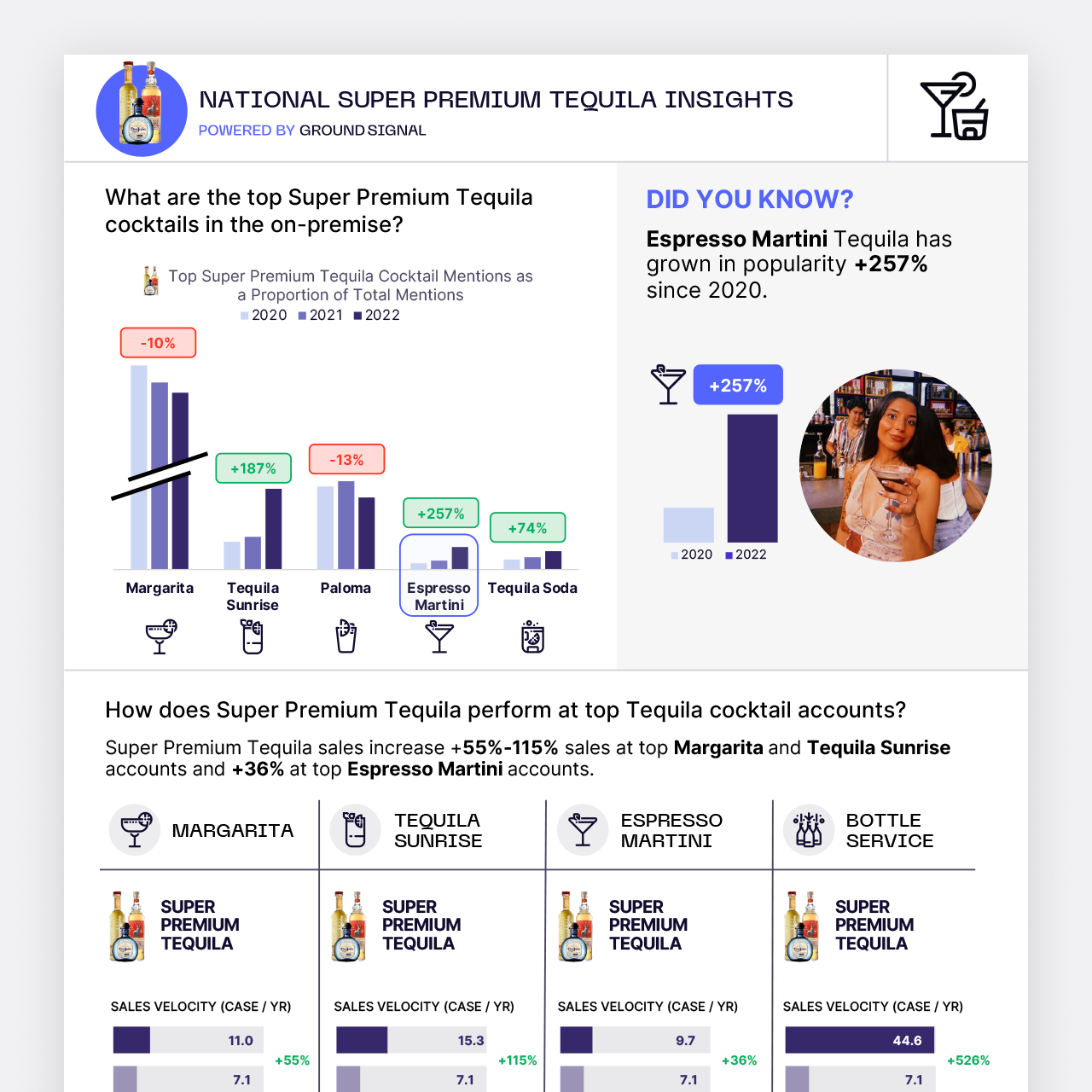
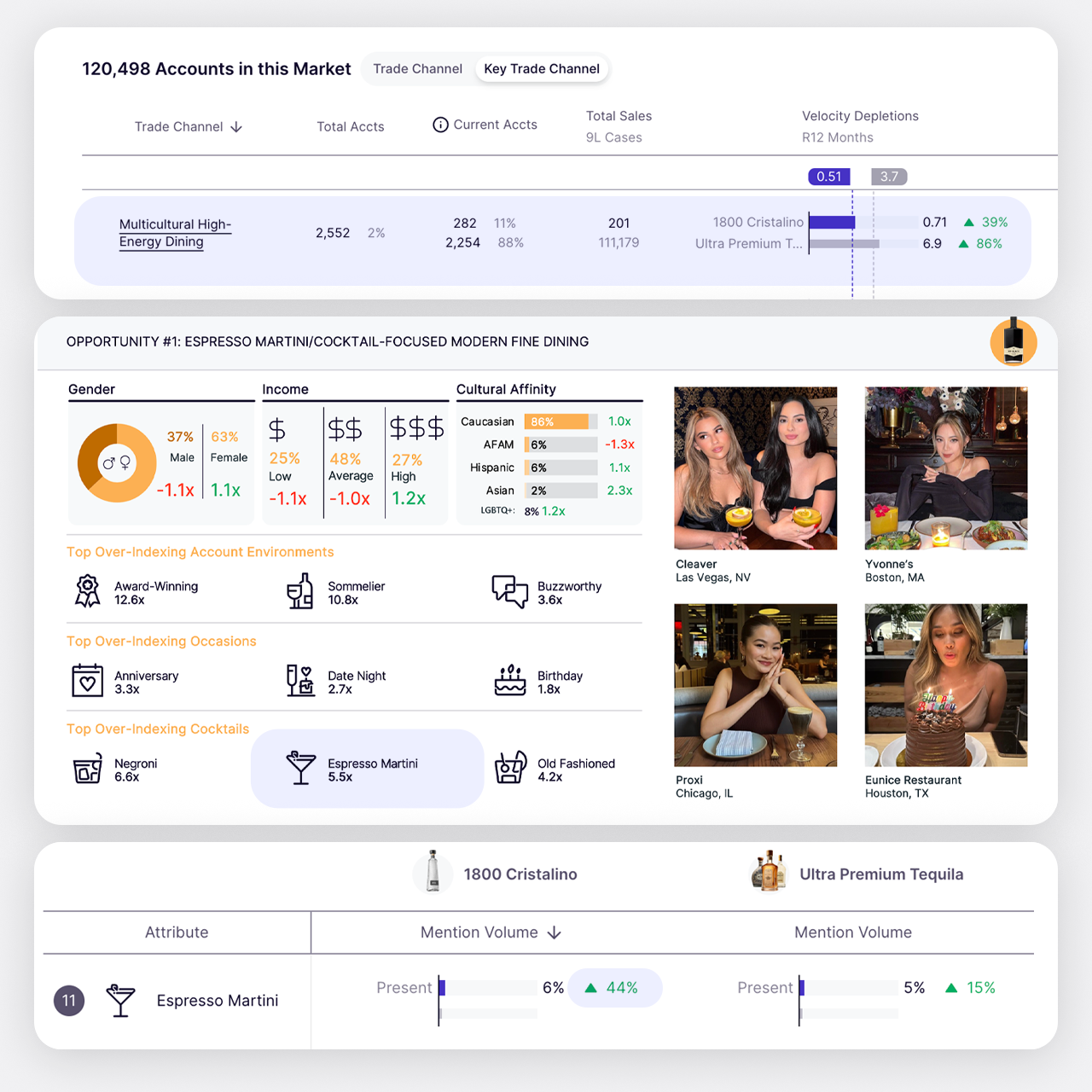
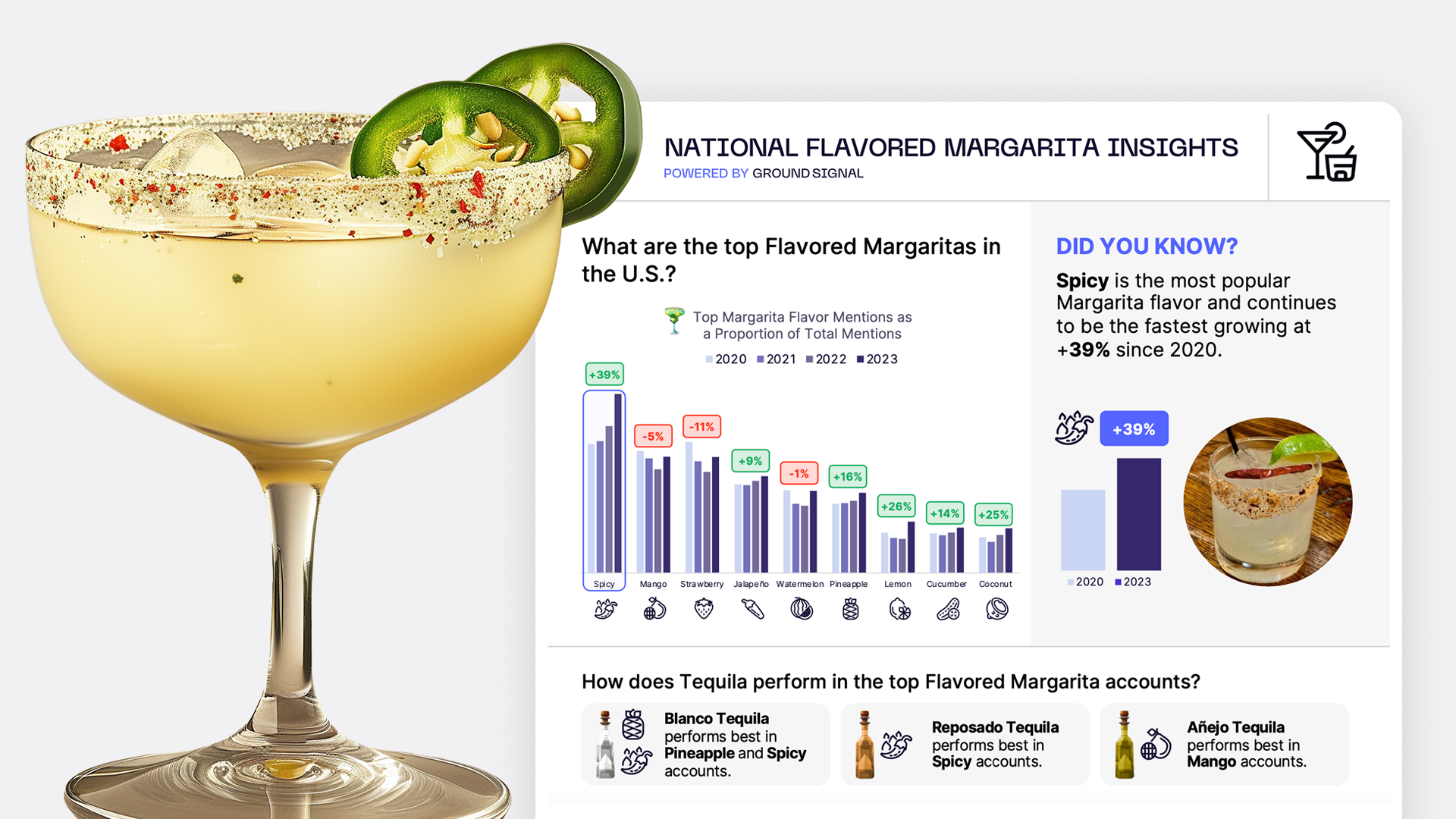
But look closer at what’s growing, and a pattern emerges: the base recipes are down while their modern spins are surging. The Martini gives way to the Lemon Drop Martini (up 252%), the Appletini, and the Lychee Martini. The Margarita cedes ground to Fruit-Flavored and Spicy versions. This isn’t menus abandoning the icons — it’s menus reinterpreting them. The clearest all-rounder is the Espresso Martini: the only top-five cocktail that’s still gaining share.
Flavors: familiar profiles soften, adventurous ones rise
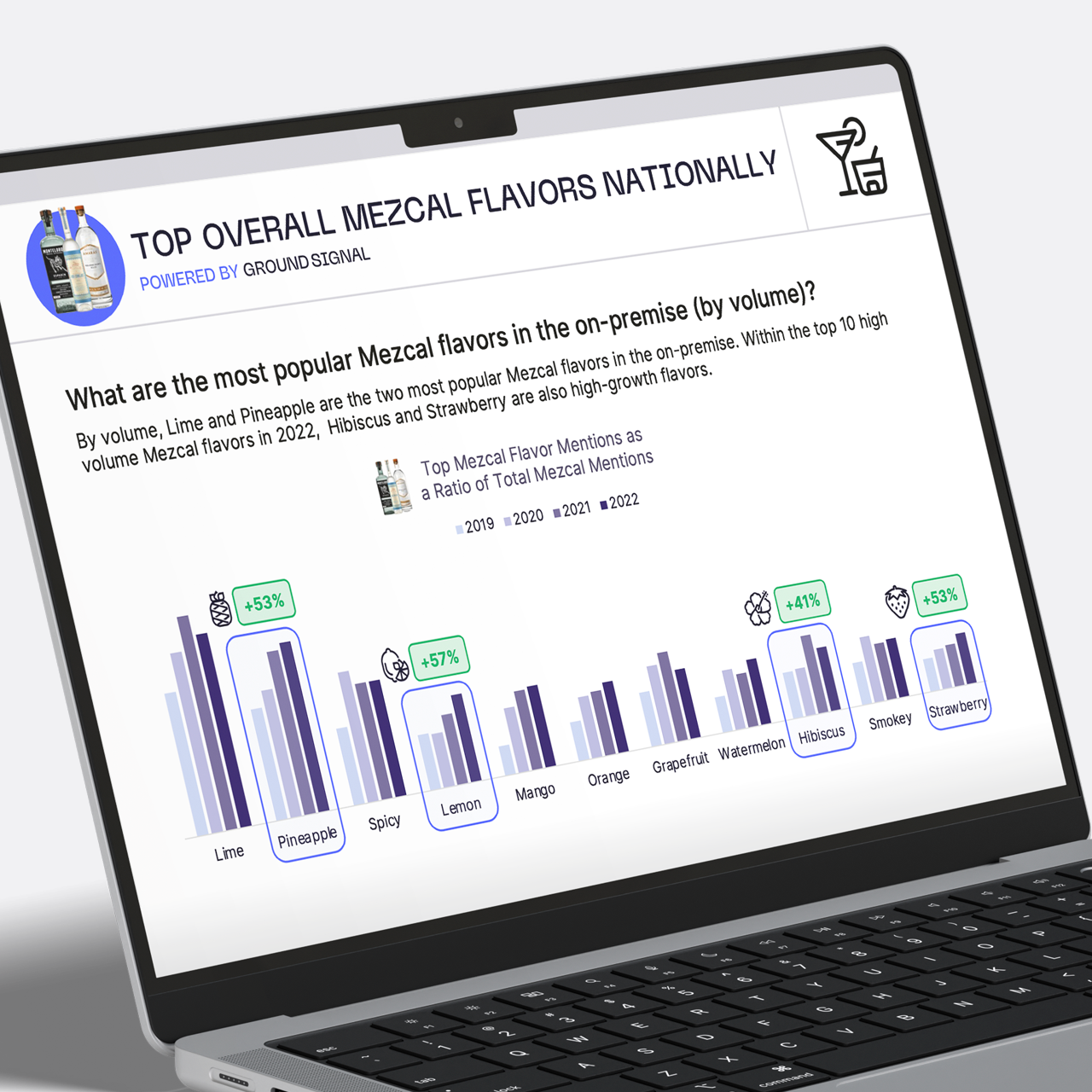
The flavor story rhymes. Lime, lemon, and orange remain the most common cocktail flavors — and all three are declining, along with pineapple and ginger. The standout exception is coffee: already a top-five flavor and still growing double digits, reinforced by the parallel rise of the Espresso Martini.
Everything else gaining ground is more adventurous and earlier-stage — yuzu, lychee, tropical, caramel, elderflower. Tellingly, as classic citrus slips, novel citrus like yuzu climbs. Palates are broadening, not narrowing.
What it means for getting on the menu
For anyone working to secure cocktail menu placements, the takeaway isn’t “chase the trend” or “stick with the classics” — it’s both. The established serves still carry the most menus and aren’t going anywhere. But operators are actively refreshing their lists, and a secondary option drawn from the emerging groups — a modern variation, a rising flavor, a challenger brand — is increasingly what earns a spot in that refresh. The brands that win menu real estate will be the ones offering venues a familiar anchor and a reason to feel current.
The classics will still define the cocktail menu for years. But Q2 makes clear that the growth is happening in the spaces around them — and that’s where the next round of menu decisions is being made.
The full Q2 Cocktail Menu Review breaks all of this down category by category — Vodka, Tequila, Rum, Gin, Whiskey, and Liqueur — with the complete brand rankings, cocktail movers, and flavor trends behind the numbers above.
Free report · 80,000+ independent on-premise accounts · No cost to access